
First impressions matter when customers visit a business. Whether entering a shopping centre, medical clinic, corporate office, or commercial building, visitors expect to find their destinations without confusion. A well-planned navigation system makes this possible. Wayfinding and directional signage in Brampton helps businesses create organized, accessible, and welcoming environments while improving the overall visitor experience.
For businesses operating in busy commercial areas, clear signage is more than a visual feature. It provides essential information, reduces unnecessary delays, and helps customers move confidently through unfamiliar spaces.
From guiding visitors toward entrances to identifying departments and accessible facilities, custom directional signs contribute to smoother daily operations. Understanding how these signs influence customer behaviour can help Brampton businesses develop more effective navigation systems.
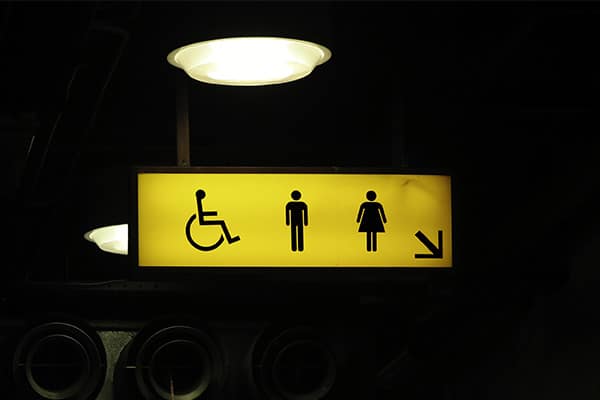
How Wayfinding and Directional Signage Influences Customer Experience
Customer experience begins before a visitor reaches the reception desk or service counter. Finding the correct parking area, building entrance, or department can shape how people perceive a business.
Wayfinding signage provides visual guidance through arrows, symbols, directories, and location identification signs. When these elements are placed strategically, visitors can make navigation decisions without relying entirely on staff assistance.
For example, a customer visiting a multi-storey medical centre may need to locate parking, identify the correct entrance, find an elevator, and reach a particular clinic. A coordinated signage system connects these steps, creating a more convenient experience.
Businesses in Brampton can use directional signage to make their properties easier to understand, especially for first-time visitors.
1. Creating a Positive First Impression Through Clear Navigation
The entrance to a commercial property is often the first opportunity to communicate with visitors. Confusing layouts, missing directions, or unclear building identification can create frustration before customers interact with employees.
Well-designed directional signs in Brampton help visitors identify important destinations immediately.
Entrance signs, parking directions, reception identification, and building directories establish a clear navigation experience.
Businesses should consider installing directional information at locations where visitors naturally stop to make decisions, such as parking entrances, building lobbies, and hallway intersections.
Consistent signage also contributes to a professional appearance, reinforcing the impression that the business is organized and attentive to customer needs.
2. Making Commercial Spaces More Accessible
Accessibility is an important consideration for businesses serving customers with different mobility, visual, and communication needs.
Effective wayfinding systems use clear lettering, recognizable symbols, appropriate contrast, and thoughtful placement to make navigation easier for a wide range of visitors.
In Ontario, accessibility-related requirements may apply depending on the building, signage type, and scope of construction or renovation.
Businesses should consider the following accessibility features:
- High-Contrast Colours: Improve the visibility of text and symbols against sign backgrounds.
- Readable Typography: Makes information easier to recognize without unnecessary visual complexity.
- Accessible Placement: Positions signs where visitors can locate and read them comfortably.
- Tactile and Braille Signage: Provides additional navigation information where required by applicable standards.
- Consistent Symbols: Helps communicate directions clearly across different areas of a property.
Accessibility should be considered during the initial signage planning process rather than treated as an optional addition.
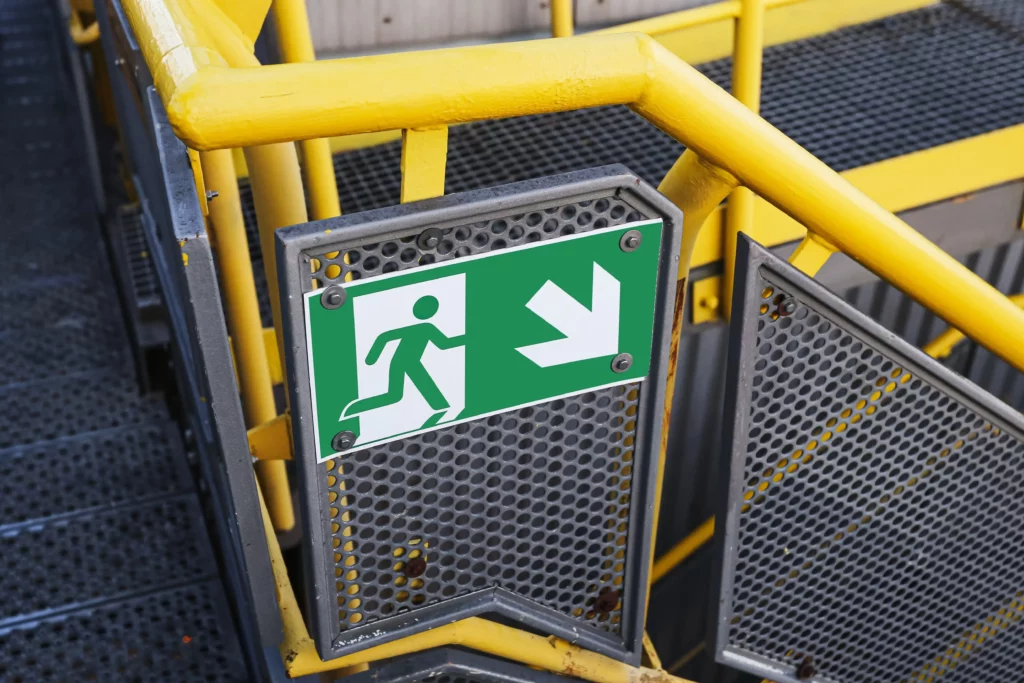
3. Reducing Customer Confusion in Busy Business Environments
Large commercial properties often contain multiple entrances, departments, corridors, and shared facilities. Without sufficient directional information, visitors may take incorrect routes or repeatedly ask employees for assistance.
Strategically positioned wayfinding signs help reduce these challenges.
For example, a shopping centre can use overhead directional signs to identify restrooms, elevators, customer service areas, and parking exits. Similarly, an office complex can install directories and floor identification signs to guide visitors toward different businesses.
Clear navigation is particularly valuable in environments where customers may be unfamiliar with the building layout.
By reducing uncertainty, businesses can make visits more convenient and improve the flow of people throughout their properties.
4. Helping Businesses Create More Efficient Customer Journeys
A customer journey includes every stage of a visitor’s interaction with a physical location, from arrival to departure.
Directional signage can support this journey by providing relevant information at each stage.
Arrival and Parking
Exterior directional signs identify parking areas, building entrances, accessible routes, and designated drop-off locations.
Entering the Building
Entrance identification signs and directories help visitors understand the building layout and locate their intended destinations.
Moving Between Departments
Hallway signs, overhead directional displays, and floor identification signs guide visitors through interior spaces.
Finding Facilities
Restroom signs, elevator identification, reception signs, and room labels provide information about important facilities.
Leaving the Property
Exit and parking directions help visitors return to their vehicles or reach the appropriate building exit.
A consistent navigation system connects these stages and helps businesses deliver a more organized customer experience.
5. Supporting Business Branding Through Custom Directional Signs
Wayfinding signage does not need to look separate from a business’s visual identity. Custom directional signs can incorporate brand colours, logos, typography, and design elements while maintaining clear communication.
For example, a corporate office may choose minimalist acrylic signs with neutral colours, while a retail environment may use bold graphics and distinctive directional symbols.
The key is balancing visual appeal with readability.
Signs should communicate directions immediately rather than requiring visitors to interpret complicated graphics.
For Brampton businesses, consistent branding across directories, room identification signs, and directional displays can create a cohesive commercial environment.
6. Improving Navigation in Healthcare and Medical Facilities
Healthcare facilities are among the environments where clear navigation is particularly important.
Patients may arrive for scheduled appointments, diagnostic tests, consultations, or other medical services. Difficulty locating departments can create unnecessary stress and delays.
Medical centres and clinics can improve navigation by installing:
- Building directories near main entrances.
- Department identification signs at hallway intersections.
- Elevator and floor identification signs.
- Clear reception and registration signs.
- Directional signs for accessible entrances and facilities.
A well-organized wayfinding system can help patients and visitors find their destinations more independently.
Healthcare signage should prioritize clarity, accessibility, and consistency rather than overly decorative designs.
7. How Wayfinding Signage Benefits Retail Stores and Shopping Centres
Retail environments rely on convenient navigation to help customers explore different areas.
In shopping centres and large retail properties, directional signs can identify store locations, customer service counters, restrooms, elevators, and parking facilities.
Clear signage helps visitors understand the layout and move between destinations without unnecessary confusion.
For retail businesses in Brampton, well-positioned wayfinding signs can also support promotional displays and branded environments without interfering with essential navigation information.
A practical signage system should be easy to understand and flexible enough to accommodate changes in store layouts or tenant locations.
8. Choosing the Right Placement for Directional Signage
Even professionally designed signs may be ineffective when installed in locations where visitors cannot easily see them.
Sign placement should reflect how people naturally move through a building.
Important installation locations include:
- Main building entrances and reception areas.
- Parking entrances and pedestrian pathways.
- Hallway intersections and decision points.
- Elevator lobbies and staircases.
- Department entrances and shared facilities.
- Large open spaces where overhead signs improve visibility.
Businesses should also consider viewing distance, lighting conditions, surrounding obstacles, and mounting height.
For larger properties, reviewing common visitor routes before installation can help identify areas where additional navigation information is needed.
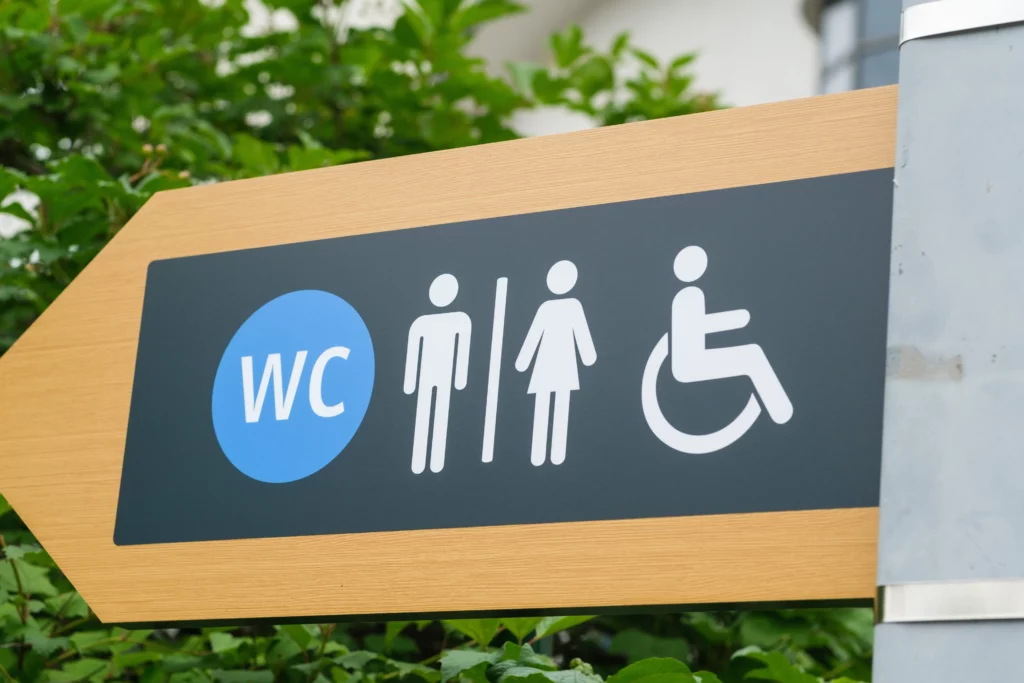
9. Common Wayfinding Signage Mistakes Businesses Should Avoid
An effective signage system requires thoughtful planning. Some common mistakes can reduce its usefulness.
Using Too Much Information
Signs containing excessive text can be difficult to read quickly. Short labels, recognizable symbols, and clear arrows generally communicate directions more effectively.
Inconsistent Sign Designs
Using different fonts, colours, and directional symbols throughout a building can make navigation confusing. Maintaining a consistent visual system improves recognition.
Poor Sign Placement
Signs positioned behind obstacles, above comfortable viewing heights, or away from decision points may be overlooked.
Ignoring Accessibility
Signs that are difficult to read or access can create navigation barriers. Accessibility considerations should be incorporated into the design and installation process.
Failing to Update Information
Outdated directories or incorrect directional information can mislead visitors. Businesses should review signage whenever departments, tenants, or building layouts change.
10. How to Evaluate Whether Your Wayfinding Signage Is Effective
Businesses can assess their navigation systems by observing how visitors move through their properties.
One practical approach is to walk through the building from the perspective of someone visiting for the first time.
During this review, consider whether the correct entrance is clearly identified, whether directions are visible at important intersections, and whether visitors can find essential facilities without assistance.
Customer and employee feedback can also reveal recurring navigation problems.
For example, if reception staff frequently receive questions about the location of a particular department, additional directional signage may be useful.
Regular evaluations help businesses identify opportunities to improve navigation as their facilities evolve.
What Factors Affect the Cost of Wayfinding and Directional Signage in Brampton?
The cost of wayfinding and directional signage in Brampton depends on factors such as sign dimensions, materials, design requirements, printing methods, and installation complexity. Interior wall-mounted signs may have different production requirements from large exterior directional signs or illuminated displays.
The number of signs required also influences the overall project scope. A small retail store may need only a few identification and directional signs, while a large office building or healthcare facility may require a coordinated navigation system with directories, floor identification, and accessible signage. Planning sign locations and specifications in advance can help businesses choose practical solutions that align with their requirements.
Why Custom Wayfinding Signage Is a Valuable Investment for Brampton Businesses
Custom directional signage provides long-term functional value by helping visitors navigate commercial spaces more easily.
Unlike temporary promotional displays, many wayfinding signs are designed to remain useful throughout everyday business operations.
A carefully planned system can support customer satisfaction, reduce repetitive navigation questions, and maintain a consistent visual environment.
Businesses should prioritize durable materials, readable designs, accessible features, and installation methods appropriate for their properties.
For companies considering custom signage solutions in Brampton, evaluating both immediate navigation needs and future building changes can help create a more adaptable signage system.
Conclusion
Wayfinding and directional signage in Brampton plays an important role in improving customer experiences, supporting accessibility, and helping businesses maintain organized commercial environments.
From medical clinics and shopping centres to corporate offices and multi-tenant buildings, clear directional information makes unfamiliar spaces easier to navigate.
By focusing on strategic placement, readable design, consistent branding, and accessibility, businesses can create navigation systems that serve visitors effectively.
Well-planned wayfinding signage is not simply about displaying directions. It is about creating a smoother, more comfortable experience for everyone entering a commercial space.
Frequently Asked Questions About Wayfinding and Directional Signage in Brampton
1. How does wayfinding signage improve customer experience?
Wayfinding signage helps customers locate entrances, departments, facilities, and exits without unnecessary confusion. Clear navigation can make commercial spaces easier and more comfortable to use.
2. What types of businesses need directional signage in Brampton?
Medical clinics, shopping centres, corporate offices, educational institutions, hotels, warehouses, and commercial complexes commonly benefit from directional signage.
3. Can wayfinding signs improve accessibility?
Yes. Features such as high-contrast lettering, clear symbols, accessible placement, and appropriate tactile information can support more inclusive navigation. Applicable legal requirements should be verified for each project.
4. Where should businesses install directional signs?
Directional signs are most effective near entrances, reception areas, hallway intersections, elevators, staircases, parking facilities, and other important navigation points.
5. Can directional signage be customized to match business branding?
Yes. Businesses can incorporate logos, brand colours, typography, and other visual elements while keeping navigation instructions clear and readable.
6. How often should businesses update wayfinding signage?
Wayfinding signage should be reviewed whenever building layouts, tenant locations, departments, or visitor routes change. Periodic inspections can also identify damaged or outdated signs.
How Wayfinding and Directional Signage in Brampton Improves Customer Experience and Business Accessibility
First impressions matter when customers visit a business. Whether entering a shopping centre, medical clinic, corporate office, or commercial building, visitors expect to find their destinations without confusion. A well-planned navigation system makes this possible. Wayfinding and directional signage in Brampton helps businesses create organized, accessible, and welcoming environments while improving the overall visitor experience.
For businesses operating in busy commercial areas, clear signage is more than a visual feature. It provides essential information, reduces unnecessary delays, and helps customers move confidently through unfamiliar spaces.
From guiding visitors toward entrances to identifying departments and accessible facilities, custom directional signs contribute to smoother daily operations. Understanding how these signs influence customer behaviour can help Brampton businesses develop more effective navigation systems.
How Wayfinding and Directional Signage Influences Customer Experience
Customer experience begins before a visitor reaches the reception desk or service counter. Finding the correct parking area, building entrance, or department can shape how people perceive a business.
Wayfinding signage provides visual guidance through arrows, symbols, directories, and location identification signs. When these elements are placed strategically, visitors can make navigation decisions without relying entirely on staff assistance.
For example, a customer visiting a multi-storey medical centre may need to locate parking, identify the correct entrance, find an elevator, and reach a particular clinic. A coordinated signage system connects these steps, creating a more convenient experience.
Businesses in Brampton can use directional signage to make their properties easier to understand, especially for first-time visitors.
1. Creating a Positive First Impression Through Clear Navigation
The entrance to a commercial property is often the first opportunity to communicate with visitors. Confusing layouts, missing directions, or unclear building identification can create frustration before customers interact with employees.
Well-designed directional signs in Brampton help visitors identify important destinations immediately.
Entrance signs, parking directions, reception identification, and building directories establish a clear navigation experience.
Businesses should consider installing directional information at locations where visitors naturally stop to make decisions, such as parking entrances, building lobbies, and hallway intersections.
Consistent signage also contributes to a professional appearance, reinforcing the impression that the business is organized and attentive to customer needs.
2. Making Commercial Spaces More Accessible
Accessibility is an important consideration for businesses serving customers with different mobility, visual, and communication needs.
Effective wayfinding systems use clear lettering, recognizable symbols, appropriate contrast, and thoughtful placement to make navigation easier for a wide range of visitors.
In Ontario, accessibility-related requirements may apply depending on the building, signage type, and scope of construction or renovation.
Businesses should consider the following accessibility features:
- High-Contrast Colours: Improve the visibility of text and symbols against sign backgrounds.
- Readable Typography: Makes information easier to recognize without unnecessary visual complexity.
- Accessible Placement: Positions signs where visitors can locate and read them comfortably.
- Tactile and Braille Signage: Provides additional navigation information where required by applicable standards.
- Consistent Symbols: Helps communicate directions clearly across different areas of a property.
Accessibility should be considered during the initial signage planning process rather than treated as an optional addition.
3. Reducing Customer Confusion in Busy Business Environments
Large commercial properties often contain multiple entrances, departments, corridors, and shared facilities. Without sufficient directional information, visitors may take incorrect routes or repeatedly ask employees for assistance.
Strategically positioned wayfinding signs help reduce these challenges.
For example, a shopping centre can use overhead directional signs to identify restrooms, elevators, customer service areas, and parking exits. Similarly, an office complex can install directories and floor identification signs to guide visitors toward different businesses.
Clear navigation is particularly valuable in environments where customers may be unfamiliar with the building layout.
By reducing uncertainty, businesses can make visits more convenient and improve the flow of people throughout their properties.
4. Helping Businesses Create More Efficient Customer Journeys
A customer journey includes every stage of a visitor’s interaction with a physical location, from arrival to departure.
Directional signage can support this journey by providing relevant information at each stage.
Arrival and Parking
Exterior directional signs identify parking areas, building entrances, accessible routes, and designated drop-off locations.
Entering the Building
Entrance identification signs and directories help visitors understand the building layout and locate their intended destinations.
Moving Between Departments
Hallway signs, overhead directional displays, and floor identification signs guide visitors through interior spaces.
Finding Facilities
Restroom signs, elevator identification, reception signs, and room labels provide information about important facilities.
Leaving the Property
Exit and parking directions help visitors return to their vehicles or reach the appropriate building exit.
A consistent navigation system connects these stages and helps businesses deliver a more organized customer experience.
5. Supporting Business Branding Through Custom Directional Signs
Wayfinding signage does not need to look separate from a business’s visual identity. Custom directional signs can incorporate brand colours, logos, typography, and design elements while maintaining clear communication.
For example, a corporate office may choose minimalist acrylic signs with neutral colours, while a retail environment may use bold graphics and distinctive directional symbols.
The key is balancing visual appeal with readability.
Signs should communicate directions immediately rather than requiring visitors to interpret complicated graphics.
For Brampton businesses, consistent branding across directories, room identification signs, and directional displays can create a cohesive commercial environment.
6. Improving Navigation in Healthcare and Medical Facilities
Healthcare facilities are among the environments where clear navigation is particularly important.
Patients may arrive for scheduled appointments, diagnostic tests, consultations, or other medical services. Difficulty locating departments can create unnecessary stress and delays.
Medical centres and clinics can improve navigation by installing:
- Building directories near main entrances.
- Department identification signs at hallway intersections.
- Elevator and floor identification signs.
- Clear reception and registration signs.
- Directional signs for accessible entrances and facilities.
A well-organized wayfinding system can help patients and visitors find their destinations more independently.
Healthcare signage should prioritize clarity, accessibility, and consistency rather than overly decorative designs.
7. How Wayfinding Signage Benefits Retail Stores and Shopping Centres
Retail environments rely on convenient navigation to help customers explore different areas.
In shopping centres and large retail properties, directional signs can identify store locations, customer service counters, restrooms, elevators, and parking facilities.
Clear signage helps visitors understand the layout and move between destinations without unnecessary confusion.
For retail businesses in Brampton, well-positioned wayfinding signs can also support promotional displays and branded environments without interfering with essential navigation information.
A practical signage system should be easy to understand and flexible enough to accommodate changes in store layouts or tenant locations.
8. Choosing the Right Placement for Directional Signage
Even professionally designed signs may be ineffective when installed in locations where visitors cannot easily see them.
Sign placement should reflect how people naturally move through a building.
Important installation locations include:
- Main building entrances and reception areas.
- Parking entrances and pedestrian pathways.
- Hallway intersections and decision points.
- Elevator lobbies and staircases.
- Department entrances and shared facilities.
- Large open spaces where overhead signs improve visibility.
Businesses should also consider viewing distance, lighting conditions, surrounding obstacles, and mounting height.
For larger properties, reviewing common visitor routes before installation can help identify areas where additional navigation information is needed.
9. Common Wayfinding Signage Mistakes Businesses Should Avoid
An effective signage system requires thoughtful planning. Some common mistakes can reduce its usefulness.
Using Too Much Information
Signs containing excessive text can be difficult to read quickly. Short labels, recognizable symbols, and clear arrows generally communicate directions more effectively.
Inconsistent Sign Designs
Using different fonts, colours, and directional symbols throughout a building can make navigation confusing. Maintaining a consistent visual system improves recognition.
Poor Sign Placement
Signs positioned behind obstacles, above comfortable viewing heights, or away from decision points may be overlooked.
Ignoring Accessibility
Signs that are difficult to read or access can create navigation barriers. Accessibility considerations should be incorporated into the design and installation process.
Failing to Update Information
Outdated directories or incorrect directional information can mislead visitors. Businesses should review signage whenever departments, tenants, or building layouts change.
10. How to Evaluate Whether Your Wayfinding Signage Is Effective
Businesses can assess their navigation systems by observing how visitors move through their properties.
One practical approach is to walk through the building from the perspective of someone visiting for the first time.
During this review, consider whether the correct entrance is clearly identified, whether directions are visible at important intersections, and whether visitors can find essential facilities without assistance.
Customer and employee feedback can also reveal recurring navigation problems.
For example, if reception staff frequently receive questions about the location of a particular department, additional directional signage may be useful.
Regular evaluations help businesses identify opportunities to improve navigation as their facilities evolve.
What Factors Affect the Cost of Wayfinding and Directional Signage in Brampton?
The cost of wayfinding and directional signage in Brampton depends on factors such as sign dimensions, materials, design requirements, printing methods, and installation complexity. Interior wall-mounted signs may have different production requirements from large exterior directional signs or illuminated displays.
The number of signs required also influences the overall project scope. A small retail store may need only a few identification and directional signs, while a large office building or healthcare facility may require a coordinated navigation system with directories, floor identification, and accessible signage. Planning sign locations and specifications in advance can help businesses choose practical solutions that align with their requirements.
Why Custom Wayfinding Signage Is a Valuable Investment for Brampton Businesses
Custom directional signage provides long-term functional value by helping visitors navigate commercial spaces more easily.
Unlike temporary promotional displays, many wayfinding signs are designed to remain useful throughout everyday business operations.
A carefully planned system can support customer satisfaction, reduce repetitive navigation questions, and maintain a consistent visual environment.
Businesses should prioritize durable materials, readable designs, accessible features, and installation methods appropriate for their properties.
For companies considering custom signage solutions in Brampton, evaluating both immediate navigation needs and future building changes can help create a more adaptable signage system.
Conclusion
Wayfinding and directional signage in Brampton plays an important role in improving customer experiences, supporting accessibility, and helping businesses maintain organized commercial environments.
From medical clinics and shopping centres to corporate offices and multi-tenant buildings, clear directional information makes unfamiliar spaces easier to navigate.
By focusing on strategic placement, readable design, consistent branding, and accessibility, businesses can create navigation systems that serve visitors effectively.
Well-planned wayfinding signage is not simply about displaying directions. It is about creating a smoother, more comfortable experience for everyone entering a commercial space.
Frequently Asked Questions About Wayfinding and Directional Signage in Brampton
1. How does wayfinding signage improve customer experience?
Wayfinding signage helps customers locate entrances, departments, facilities, and exits without unnecessary confusion. Clear navigation can make commercial spaces easier and more comfortable to use.
2. What types of businesses need directional signage in Brampton?
Medical clinics, shopping centres, corporate offices, educational institutions, hotels, warehouses, and commercial complexes commonly benefit from directional signage.
3. Can wayfinding signs improve accessibility?
Yes. Features such as high-contrast lettering, clear symbols, accessible placement, and appropriate tactile information can support more inclusive navigation. Applicable legal requirements should be verified for each project.
4. Where should businesses install directional signs?
Directional signs are most effective near entrances, reception areas, hallway intersections, elevators, staircases, parking facilities, and other important navigation points.
5. Can directional signage be customized to match business branding?
Yes. Businesses can incorporate logos, brand colours, typography, and other visual elements while keeping navigation instructions clear and readable.
6. How often should businesses update wayfinding signage?
Wayfinding signage should be reviewed whenever building layouts, tenant locations, departments, or visitor routes change. Periodic inspections can also identify damaged or outdated signs.