 A retail store has only a few seconds to catch someone’s attention. Before customers see your products or speak with your staff, they often notice your storefront and signage first.
That makes retail store signage an important part of the customer experience.
The right signs can help shoppers notice your store, recognize your brand, find promotions and move around the space more easily. But one sign cannot do every job. A successful retail location usually combines exterior, promotional and interior signage.
Whether you’re opening a boutique, grocery store, furniture showroom, beauty store or another retail business, here are 12 of the best signs for retail stores and where to use them
Your storefront sign identifies the business. Window graphics can promote an offer. Directional signs help shoppers find departments. Point-of-purchase signs draw attention to specific products.
12 Best Signs for Retail Stores
1. Channel Letter Signs
Channel letters are one of the most popular choices for retail storefronts.
These three-dimensional letters are individually fabricated and can be customized to match your business name, logo, colours and font.
They can also be illuminated with LEDs for greater visibility after dark.
Channel letters work particularly well for:
- Clothing stores
- Grocery stores
- Electronics retailers
- Beauty stores
- Furniture showrooms
- Shopping plaza units
- Specialty retailers
2. Storefront Signs
Your storefront sign is usually the primary identification sign for your business.
A good storefront sign should make it easy for customers to answer two questions quickly:
What business is this?
Where is the entrance?
Depending on the property and brand, storefront signage can include:
- Channel letters
- Dimensional letters
- Sign boxes
- Illuminated signs
- Awning signs
- Logo signs
Keep the design simple enough to recognize from the expected viewing distance.
A storefront facing a busy road needs a different approach from a boutique primarily seen by pedestrians.
Best for: Almost every physical retail location.
Internal link: Storefront Signs
3. Window Graphics
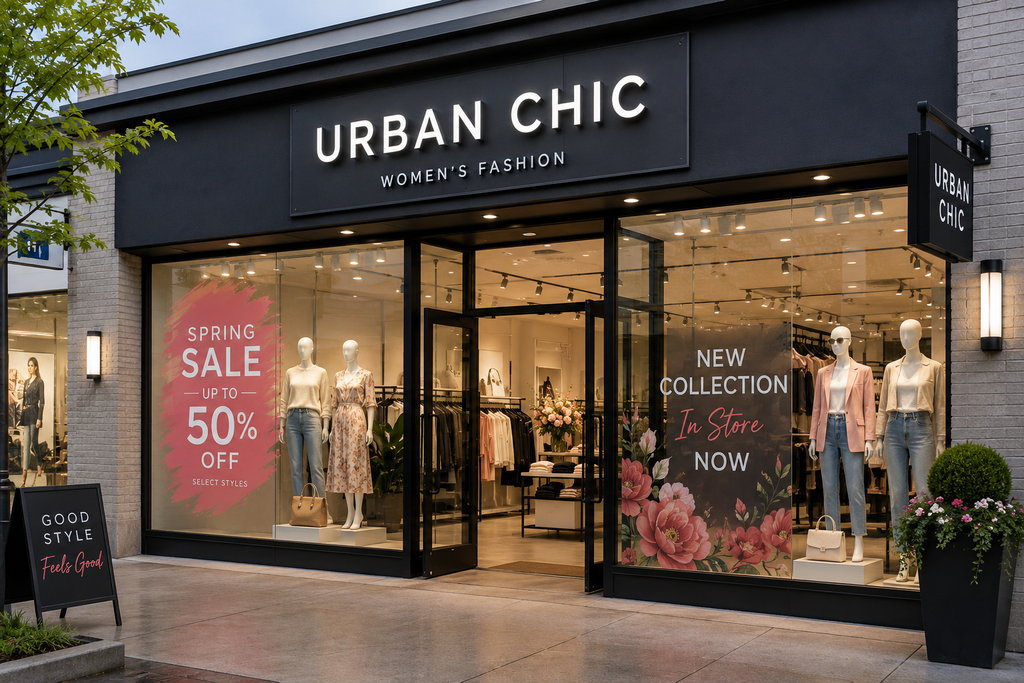
Retail windows are valuable advertising space.
Window graphics allow you to use that space for branding, promotions and useful customer information without installing another permanent building sign.
Retailers can use window graphics for:
- Logos
- Store hours
- Seasonal sales
- New product launches
- Promotional messages
- Contact information
- Decorative branding
- Privacy
- Full-window displays
For example, a beauty retailer could keep its permanent storefront sign unchanged while replacing seasonal window graphics throughout the year.
That gives the storefront a fresh appearance without redesigning the main sign every time a promotion changes.
Best for: Promotions, seasonal campaigns and storefront branding.
4. Pylon Signs
A great storefront sign will not help much if drivers cannot see your store from the road.
That’s where pylon signs can be useful.
Pylon signs are tall, freestanding signs designed to provide visibility from farther away. They are commonly found at:
- Shopping plazas
- Retail centres
- Large commercial properties
- Roadside businesses
- Multi-tenant developments
For a retailer inside a large plaza, the pylon sign can tell a driver that the store is there before the storefront itself becomes visible.
Example
A plaza might have a roadside sign displaying:
Grocery Store
Pharmacy
Pet Store
Furniture Store
Restaurant
Customers can recognize the businesses and know where to turn before reaching the property.
Best for: Retail businesses set back from busy roads.
5. Blade Signs
Retail stores in pedestrian-heavy areas need to think differently.
Someone walking along the sidewalk may approach your storefront from the side rather than looking directly at the building.
A blade sign projects outward from the building, making it easier to see from either direction.
They work particularly well for:
- Boutiques
- Gift shops
- Jewellery stores
- Bookstores
- Cafés
- Specialty retailers
Blade signs can also be customized with different shapes, materials, colours and branding.
Best for: Retail locations with significant pedestrian traffic.
6. Illuminated Signs
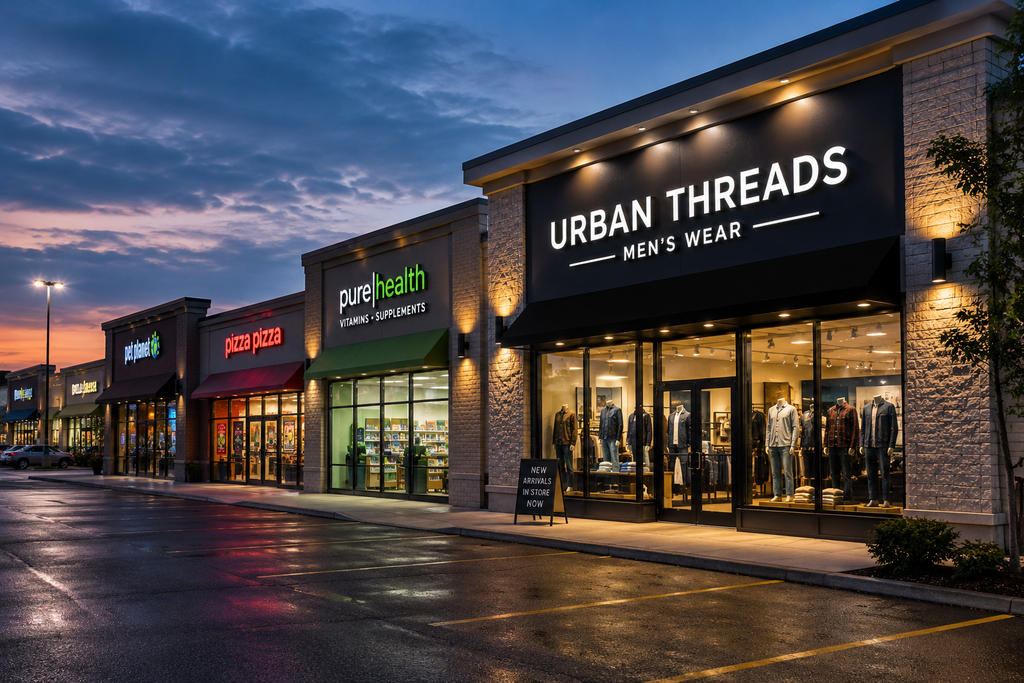
If your retail store operates after sunset, your signage still needs to work when natural light disappears.
Illuminated signage can include:
- Front-lit channel letters
- Halo-lit letters
- Sign boxes
- Backlit signs
- LED signs
Lighting is particularly valuable for stores operating into the evening or businesses located in busy commercial areas where several signs compete for attention.
Canadian retailers also need to consider how their storefront appears during the darker winter months.
A sign that is highly visible at 2 p.m. may be much harder to find later in the day.
Best for: Stores with evening operating hours.
7. Awning Signs
Awning signs combine branding with a functional storefront feature.
The business name or logo can be incorporated into an awning above the entrance or windows.
They can work particularly well for:
- Boutiques
- Specialty shops
- Bakeries
- Fashion stores
- Small neighbourhood retailers
Awnings can give a storefront a distinctive architectural appearance while providing additional space for branding.
Best for: Boutique and street-facing retail locations.
8. Dimensional Letter Signs
Not every retail sign needs illumination.
Dimensional letters create depth by raising the letters or logo away from the mounting surface.
They can be used both outside and inside a retail store.
Common applications include:
- Storefront names
- Feature walls
- Checkout areas
- Brand displays
- Customer service counters
Materials such as acrylic, metal and PVC can produce very different appearances.
For premium retailers, metal or acrylic dimensional letters behind the checkout counter can reinforce the brand without making the interior feel overly promotional.
Best for: Professional and premium retail branding.
9. Wayfinding and Directional Signs
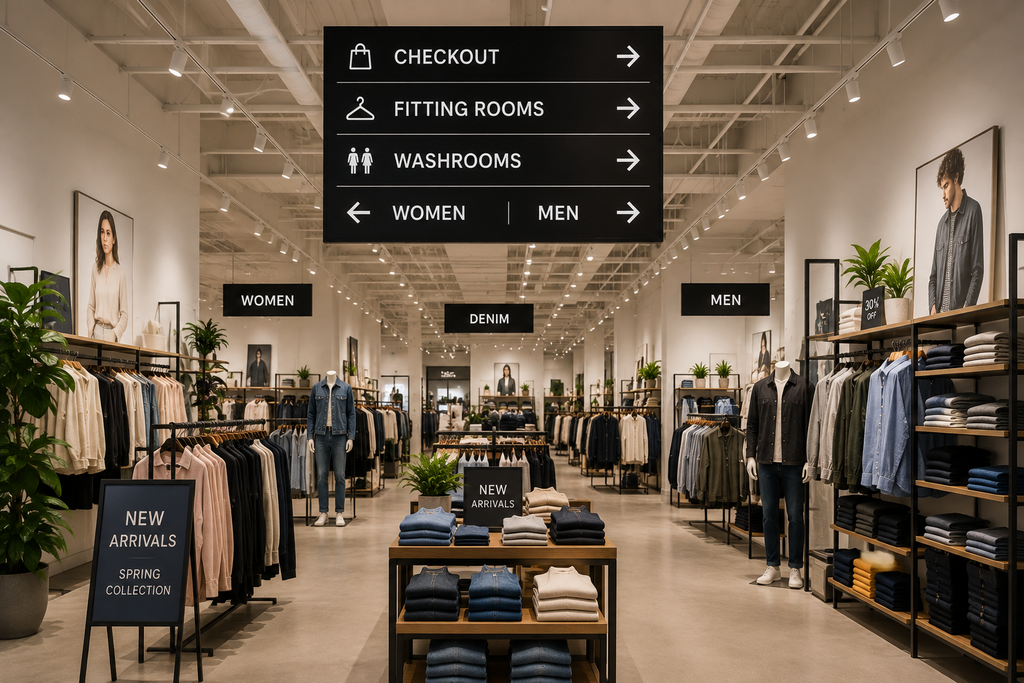
Large stores need more than branding.
Customers should be able to find what they need without walking through every aisle.
Wayfinding signs can direct shoppers toward:
- Checkout
- Customer service
- Fitting rooms
- Washrooms
- Returns
- Elevators
- Exits
- Specific departments
- Pickup areas
Consistent fonts, colours, symbols and arrows make these signs easier to understand.
Best for: Department stores, supermarkets and larger retail spaces.
10. Wall Graphics and Murals
Retail walls do not have to remain blank.
Large wall graphics and murals can turn unused surfaces into branded features.
Retailers can use them to display:
- Brand stories
- Lifestyle photography
- Product imagery
- Company values
- Decorative patterns
- Local themes
- Promotional messages
For example, an outdoor clothing retailer could use a large mountain mural behind a product display to create an environment connected to its brand.
Wall graphics can be especially effective in fitting-room areas, checkout zones and feature displays.
Best for: Creating an immersive branded environment.
11. Promotional Banners and Sale Signs
Retail promotions change frequently, so not every sign should be permanent.
Banners and temporary promotional signs can advertise:
- Grand openings
- Clearance events
- Holiday sales
- New collections
- Limited-time offers
- Storewide promotions
The key is keeping the message simple.
Instead of:
“Come Inside Today to Explore Our Incredible End-of-Season Promotional Event With Discounts Across Selected Products”
use:
END-OF-SEASON SALE
UP TO 40% OFF
A customer should understand the offer almost immediately.
Best for: Temporary campaigns and seasonal promotions.
12. Point-of-Purchase Signs
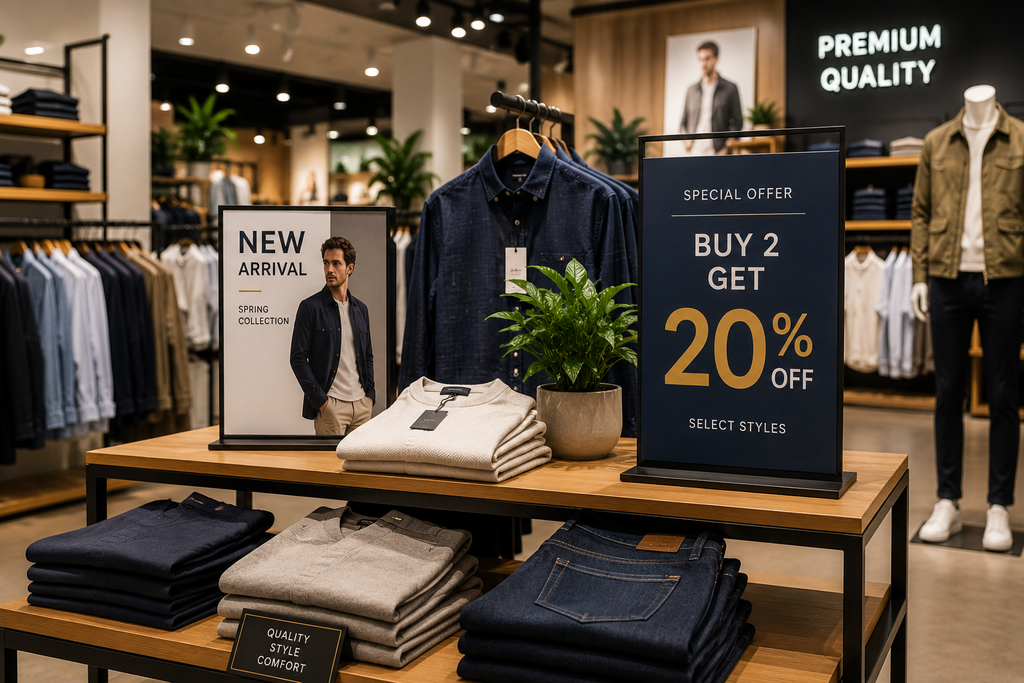
Once shoppers enter your store, signage can help draw attention to individual products.
Point-of-purchase (POP) signs are positioned close to the product or purchasing decision.
They can highlight:
- New arrivals
- Best sellers
- Product benefits
- Special pricing
- Bundle offers
- Limited-time deals
Placement matters.
A promotion for an accessory, for example, may work better beside a related product than at the opposite side of the store.
Best for: Supporting promotions and product discovery inside the store.
Frequently Asked Questions About Retail Store Signs
1. What type of sign is best for a retail store?
Channel letters and other storefront signs are strong choices for primary business identification. The best option depends on the store’s location, viewing distance, operating hours and branding.
2. What signs should a retail store have?
A retail store may need a storefront sign, window graphics, promotional signs and interior directional signage. Larger stores may also need department signs, wayfinding signs and point-of-purchase displays.
3. Are illuminated signs good for retail stores?
Yes. Illuminated signage can make a store easier to identify during evening hours and in busy commercial areas. Channel letters, halo-lit signs and illuminated sign boxes are common options.
4. What information should be on a retail storefront sign?
Keep the primary storefront sign simple. The business name and logo should usually receive the most attention. Store hours, contact details and promotional information can be placed on doors, windows or secondary signs.
5. Are window graphics good for retail stores?
Yes. Window graphics can display branding, sales, new products, business hours and other information. They can also be replaced when campaigns or seasons change.
6. How can signs help customers inside a retail store?
Wayfinding and directional signs can identify departments, fitting rooms, checkout areas, customer service, washrooms and exits. Promotional signs can also help customers discover products and offers.
7. What is the best signage for a store in a shopping plaza?
Channel letters are a strong option for storefront identification, while a pylon or plaza sign can help drivers locate the business from the road. Window graphics can provide additional promotional space.
8. What is the best signage for a small boutique?
A boutique may benefit from a combination of a storefront or blade sign, window graphics and simple interior branding. The exact combination depends on whether most customers approach on foot or by vehicle.