
Acrylic vs. Vinyl Door Signs: Which Is Better for Your Brampton Business?
Acrylic door signs are generally better for businesses seeking a polished, permanent-looking display, while vinyl door signs are often more suitable for glass surfaces, flexible graphics, and budget-conscious projects. The right choice depends on where the sign will be installed, how frequently information changes, and the appearance your business wants to achieve.
For businesses in Brampton, Ontario, both materials offer useful applications, but they serve different purposes.
Whether you manage a retail store, professional office, clinic, or commercial property, understanding these differences can help you make a more informed purchasing decision.
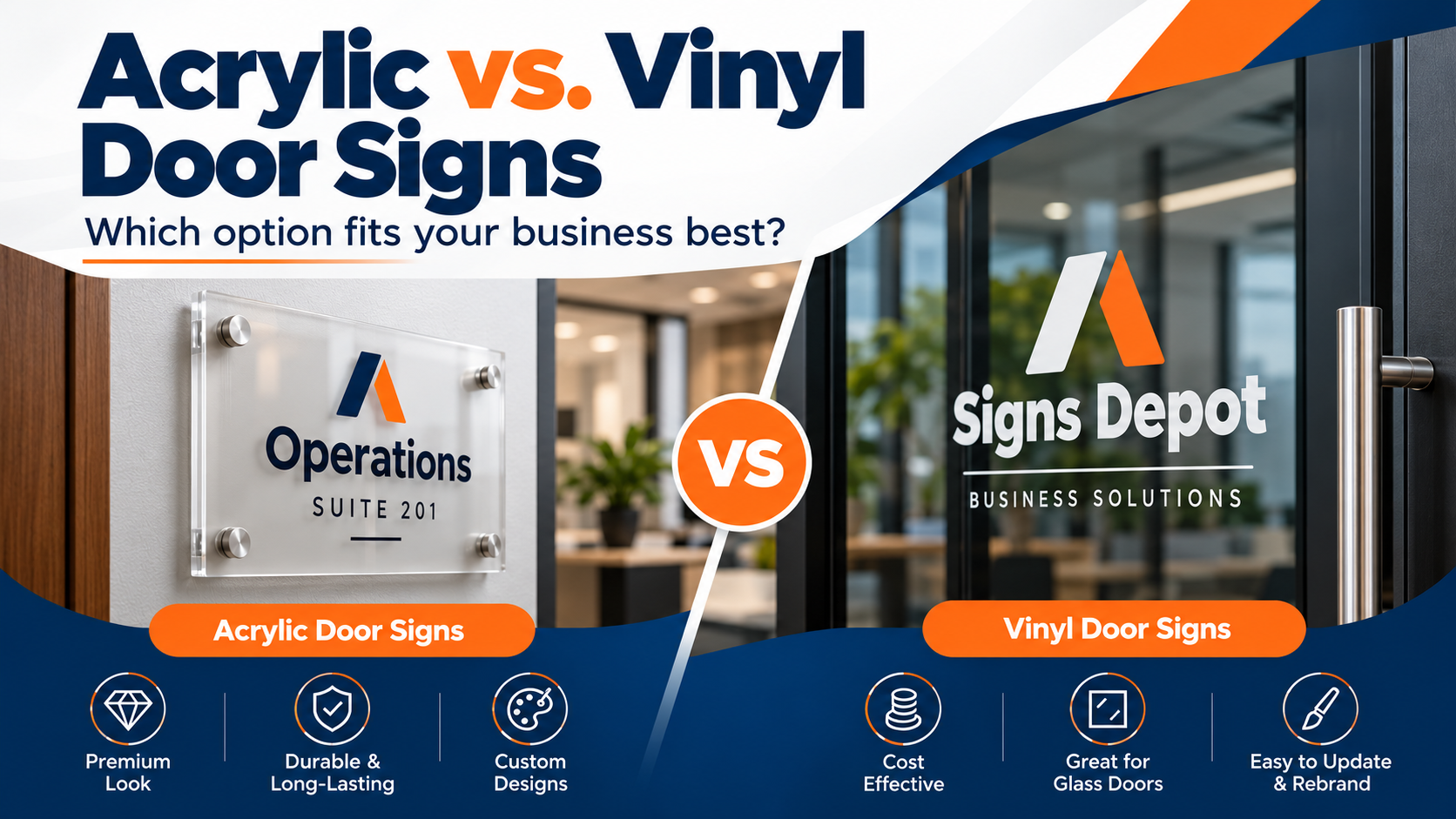
Acrylic vs. Vinyl Door Signs: Quick Comparison
Before selecting a material, consider how each option performs in everyday commercial environments.
Feature | Acrylic Door Signs | Vinyl Door Signs |
Appearance | Rigid, polished, professional | Flat, graphic-focused, customizable |
Common Applications | Office identification, room plaques | Glass doors, opening hours, promotional graphics |
Installation | Usually mounted using suitable hardware or adhesives | Applied directly to compatible surfaces |
Design Flexibility | Different shapes, finishes, and colours | Printed graphics, lettering, and branding |
Updates | May require a new panel or face | Graphics can often be replaced |
Cost Considerations | Depends on thickness, finish, and mounting | Depends on size, coverage, and vinyl type |
Maintenance | Cleaning suited to acrylic surfaces | Gentle cleaning to protect the applied graphics |
Neither material is automatically the best option for every business.
What Makes Acrylic Door Signs a Popular Choice?
Acrylic is a rigid plastic material commonly used in professional commercial signage.
Its smooth surface and range of available finishes make it suitable for businesses looking for a distinctive presentation.
1. A Professional Appearance
Acrylic signs can provide a clean, contemporary appearance.
For example, a law office might choose a mounted acrylic plaque displaying its company name, while a consultation room could use a smaller panel for room identification.
The material can complement modern interiors without requiring complicated graphics.
2. Custom Design Possibilities
Acrylic can be customized with different colours, shapes, and design treatments, depending on manufacturing specifications.
This makes it useful for businesses that want consistent identification across multiple rooms or departments.
Companies exploring additional material options can review custom acrylic signs in Brampton for related commercial signage applications.
3. Suitability for Long-Term Identification
Acrylic is worth considering when information is expected to remain relatively unchanged.
Permanent department names, room numbers, and business identification are examples.
However, durability depends on material quality, installation conditions, and maintenance.
When Are Vinyl Door Signs the Better Option?
Vinyl signage offers a flexible alternative, particularly for businesses using glass entrances and doors.
It can display information without requiring a separate rigid panel.
Ideal for Glass Door Branding
Consider a retail business with a glass entrance.
Instead of mounting a large plaque, the business could apply vinyl lettering featuring its name, opening hours, or selected branding elements.
This can preserve the appearance of the glass while communicating useful information.
Useful for Changing Information
Vinyl is also appropriate when businesses anticipate periodic updates.
Examples include:
- Store opening hours
- Department identification
- Business contact information
- Temporary visitor instructions
- Promotional door graphics
Not every vinyl product is equally easy to remove. Removal depends on the adhesive, application surface, and installation conditions.
Businesses comparing options can explore custom vinyl signs for additional applications.
Which Door Sign Material Offers Better Value?
The best value depends on the total requirements of the project rather than material price alone.
For example, a small professional office may prefer acrylic identification plaques because they provide a consistent appearance across rooms.
A retail store may find vinyl more practical for displaying information on glass doors.
When comparing quotations, consider five factors:
- Material specifications: Type, thickness, finish, and suitability for the surface.
- Dimensions: Larger signs generally require more material.
- Design complexity: Intricate shapes and graphics may affect production.
- Installation: Mounting requirements can influence total cost.
- Replacement needs: Frequently changing information may create additional expenses.
Signs Depot does not publish a universal price for every door sign configuration. A customized quotation is the appropriate way to compare project costs.
Best Door Sign Options for Different Brampton Businesses
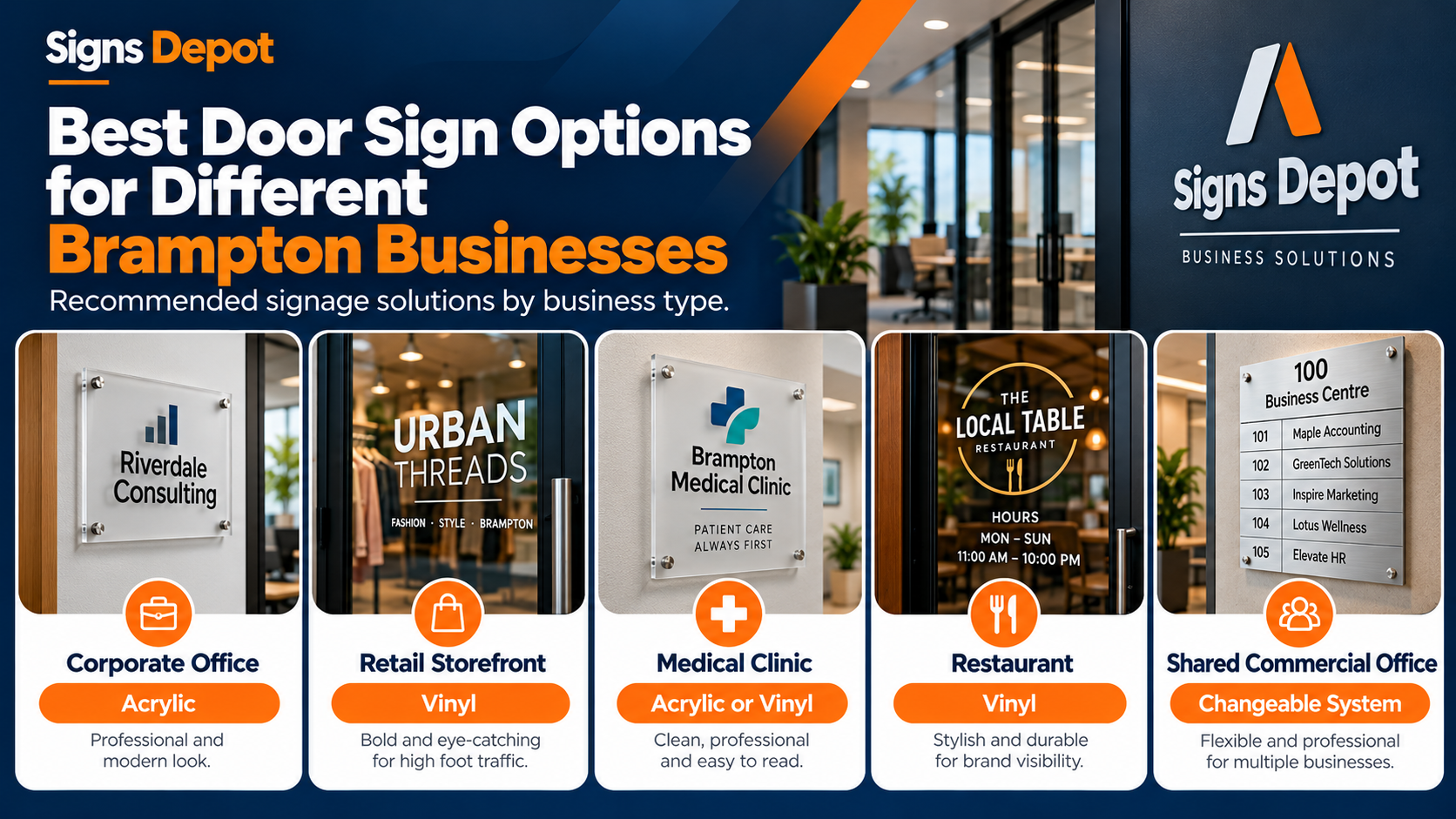
The following examples illustrate how signage priorities change across commercial environments.
Business Type | Material to Consider | Reason |
Corporate office | Acrylic | Permanent-looking room identification |
Retail storefront | Vinyl | Branding and information on glass |
Medical clinic | Acrylic or vinyl | Depends on surface, identification, and accessibility requirements |
Restaurant | Vinyl | Entrance information and operating hours |
Shared commercial office | Changeable system | Room information may change frequently |
These examples are starting points, not universal rules.
For a business with multiple rooms, combining door identification with professional office signs can create a more coordinated interior environment.
Should Businesses Combine Acrylic and Vinyl Door Signs?
Yes. A combination can be appropriate when different areas have different signage requirements.
Imagine a Brampton business with a glass entrance, reception area, and several private offices.
Vinyl lettering could identify the company at the entrance, while acrylic plaques could identify permanent departments.
This approach allows each material to serve a specific purpose.
The important consideration is visual consistency.
Using similar typography, colours, and terminology can help different signage materials appear coordinated.
Common Mistakes When Choosing Commercial Door Sign Materials
Businesses sometimes select signage based solely on appearance.
That can create unnecessary problems after installation.
Ignoring the mounting surface: Not every material or adhesive is suitable for every door.
Overlooking lighting: Reflective finishes and poor contrast can reduce readability.
Choosing permanent graphics for changing information: Frequently updated details may benefit from replaceable signage.
Forgetting maintenance: Acrylic and vinyl require appropriate cleaning methods.
Assuming all signs meet accessibility requirements: Accessibility depends on design, purpose, placement, and applicable regulations, not simply the material selected.
Reviewing these issues before production can help avoid unsuitable purchases.
What to Ask Before Ordering Custom Door Signs
Before contacting a signage provider, prepare a short project brief.
Include the number of doors, installation surfaces, required information, approximate dimensions, and preferred appearance.
Also explain whether the signs will be installed indoors or exposed to outdoor conditions.
If the location requires accessible identification, communicate those requirements clearly.
For projects involving multiple doors, ask whether a consistent design system can be developed.
Businesses can review Signs Depot’s custom door signs to explore the broader category before discussing specific materials.
Frequently Asked Questions
Are acrylic door signs more durable than vinyl signs?
Acrylic is rigid, while vinyl is a flexible applied graphic. Their performance depends on material specifications, environment, installation quality, and maintenance. Neither option is universally more durable in every application.
Can vinyl signs be applied to glass office doors?
Yes. Compatible vinyl products can be applied to suitable glass surfaces for lettering, branding, and information displays.
Are acrylic signs suitable for commercial office interiors?
Yes. Acrylic is commonly considered for permanent room identification, business branding, and other interior signage applications.
Can businesses replace existing vinyl door graphics?
In many cases, existing vinyl can be removed and replaced. Surface condition, adhesive properties, and removal methods should be assessed first.
How much do custom door signs cost in Brampton?
Prices depend on sign size, material, finishing, graphics, quantity, and installation requirements. Requesting a project-specific quotation provides a more reliable estimate.
Get Custom Door Signs for Your Brampton Business
Choosing between acrylic and vinyl door signs is easier when you start with the sign’s purpose.
Acrylic may be appropriate for permanent identification and a polished presentation. Vinyl may be the better option for glass-door graphics, flexible messaging, and selected cost-conscious applications.
Signs Depot provides custom signage solutions for businesses in Brampton, Ontario.
Whether you need identification plaques, entrance graphics, or coordinated commercial signage, discuss your requirements with the Signs Depot team.
Signs Depot
20 Strathearn Ave, Unit 2
Brampton, ON L6T 4P1, Canada
Phone: 647-763-9173
Email: info@signsdepot.com
Request a custom door signage quotation and find the right material for your business.